
ABU — from watch factory to world-leading tackle company.
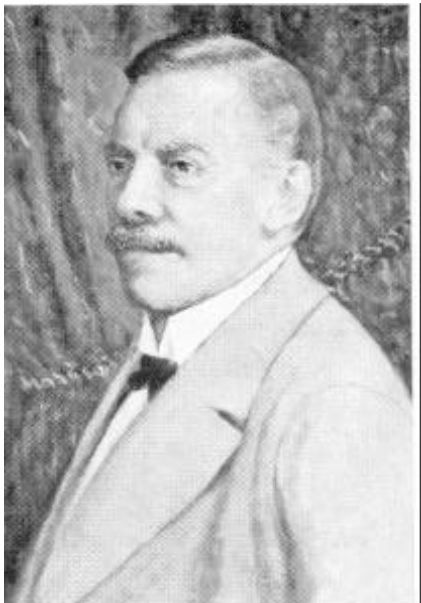
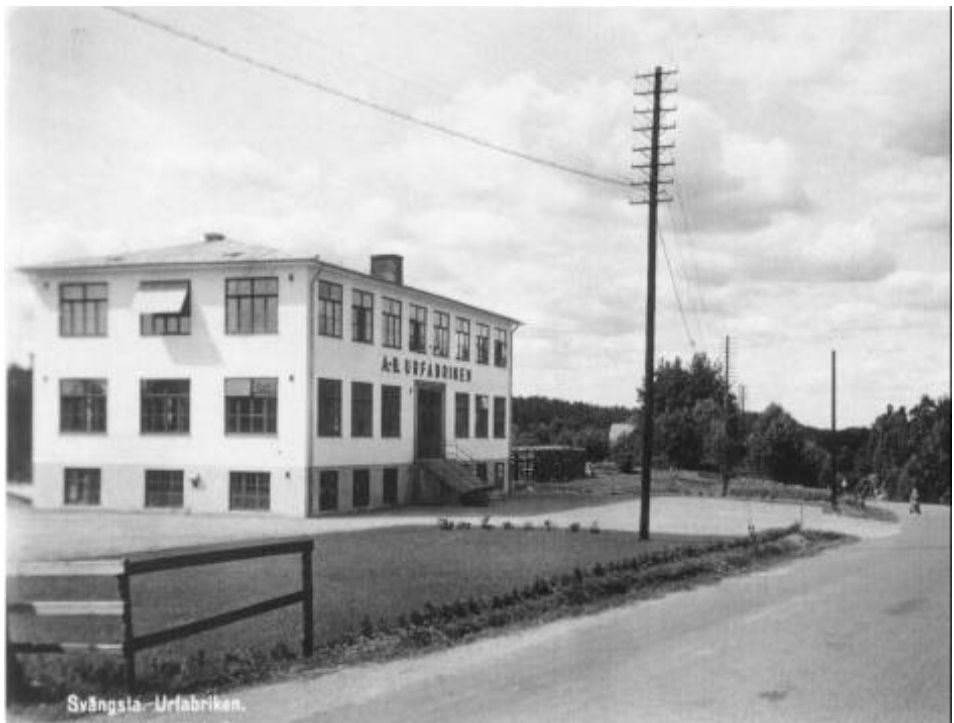
Aktiebolaget Urfabriken was founded in 1921 in Svängsta by Carl August Borgström. During the 20th century, the small company from Blekinge became one of the world's most famous manufacturers of fishing reels, rods, and lures — putting Svängsta on the world map of sportfishing.
The watch factory in Svängsta
Carl August Borgström had worked as a foreman at the Halda factory, but was laid off after the First World War when Halda ran into difficulties. Despite the tough times, he gathered several unemployed watchmakers from Halda and in 1921 started his own firm in Svängsta by the Mörrum River — Aktiebolaget Urfabriken, abbreviated ABU. They took over parts of Halda's former manufacturing. The first workshop was housed in a building that had previously been a Baptist chapel.
Taximeters and telurs
At Halda, Borgström had been involved in designing taximeters for horse-drawn carriages, and it was therefore natural that he continued the development of these devices in his own company — now for taxi cars. In 1926, the design was complete. The company then had four employees. His son Göte would alternately assemble the devices, go out and sell them, install them, and return to Svängsta to sit at the workbench. Gradually the pace quickened, turnover increased, and the workforce grew. As the number of taxis grew, production increased and exports to other countries took off. Around the world, the length of telephone calls also began to be measured using the watch factory's telurs.
Generation shift and the Rekord taximeter
In 1934, C.A. Borgström passed away and his son Göte Borgström took over the management of the factory. He immediately set about designing the world's smallest taximeter. The new Rekordtaxametern was ready in 1939 and was a technical triumph — but World War II, with petrol rationing and other difficulties, put an end to the large sales they had hoped for.
From clockworks to fishing reels
Now followed a critical time for the watch factory. To save the company, they had to start manufacturing a new product. The choice was between pendulum clocks and baitcasting reels — in the end, they chose baitcasting reels, which proved to be a real stroke of luck. In 1939, the construction of the first baitcasting reels began. These were made by hand and there were four models. The following year, 1940, the first demonstration reels were ready, and with them in his suitcase, Göte Borgström began his sales trips.
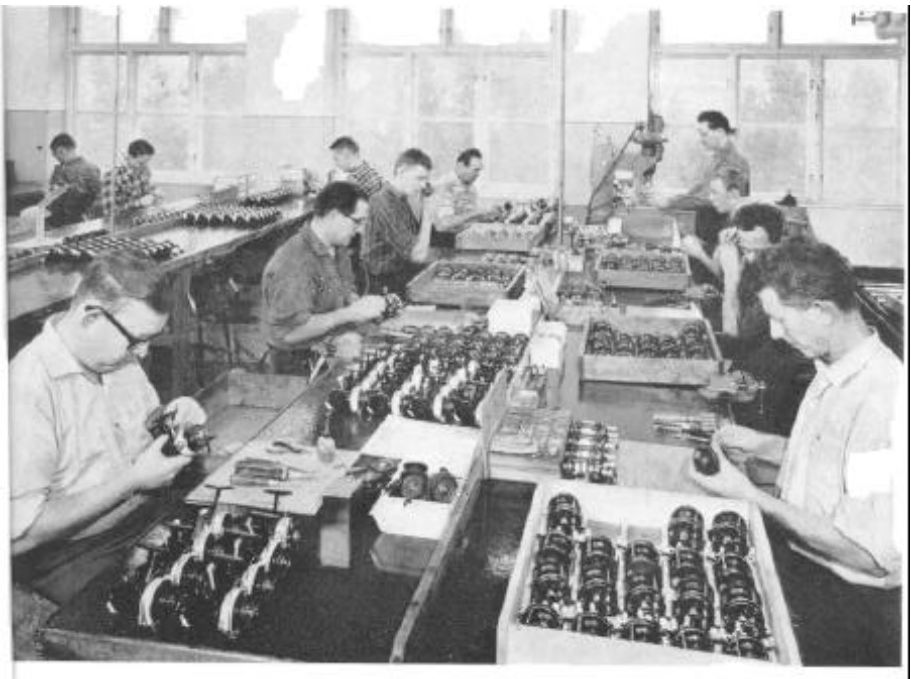
The first four models were the Record 1500, 1600, 1700 and 1800, and a total of 25 reels were made in the first trial series. Göte Borgström travelled to Gothenburg and showed them to the wholesaler Paul Berghaus & Co, whose managing director Hakon Sjödahl received him. The deal was struck — on the condition that the reels were sold under the wholesaler's own brand PEBECO, formed from the name Paul Berghaus & Co. Record 1500 became PEBECO 111, 1600 became 222, 1700 became 333 and 1800 became 444. The first reels were delivered in the autumn of 1940 and marketed more widely in the spring of 1941. The know-how from watchmaking — small gears, tight tolerances and reliable precision mechanics — proved ideal for fishing reels.
The factory grows
In 1943, the company moved into a factory building that forms part of the current factory complex. The number of employees grew steadily, and after only a few years, it became clear that the new factory was too small. A first extension was completed in 1953, doubling both the company's floor space and capacity. Further extensions were made in 1958, 1960, and 1964.
Ambassadeur, Cardinal and Abumatic
In 1952, the Ambassadeur 5000 was launched, a red multiplier reel that would become one of the world's most sold and copied fishing reels. During the 1960s, the range was supplemented by the Cardinal series, spinning reels that became international bestsellers. The Abumatic, a closed-face spinning reel, became popular for lighter spin fishing. Together with rods, lures such as Toby and Droppen, and accessories, ABU was built into a complete sportfishing brand.
Napp och Nytt
From 1948 to 2021, ABU published the classic annual catalogue Napp och Nytt, for a total of 74 editions. The catalogue became much more than a product catalogue — it contained fishing stories, technical articles, travel reports, and became a fundamental part of Swedish sportfishing history. The entire series is collected and available to read in the 5000 Arkivet.
Changes in ownership and international expansion
During the 1960s and 70s ABU exported worldwide, with a particularly strong presence in the USA, the UK and Japan. Göte Borgström died in 1974 and his son Lennart Borgström took over. The company was sold to Incentive in 1975, on to Aritmos in 1988, and in 1995 the American company Berkley acquired it. Today ABU is part of the Pure Fishing group under the Abu Garcia brand. On 10 December 2025 the last fishing reel was made at Abu Garcia's factory in Svängsta.
Svängsta today
Even though large-scale manufacturing has moved, ABU's heritage lives on in Svängsta. The town is an important destination for anglers from all over the world thanks to the Mörrumsån river and unique industrial history. The museum is well worth a visit — the oldest manufacturing equipment is preserved there. The 5000 Arkivet documents and makes this history accessible to new generations.
Questions and answers
+What does ABU stand for?
ABU is an abbreviation of Aktiebolaget Urfabriken, the company founded in 1921 in Svängsta for the manufacture of watches, taximeters, and precision mechanics.
+When did ABU start making fishing reels?
Design work began in 1939 with the Record 1500, 1600, 1700 and 1800. The first reels were delivered in the autumn of 1940 to Paul Berghaus & Co and sold under the PEBECO brand. The Ambassadeur 5000 was launched in 1952.
+What did ABU manufacture before fishing reels?
Pocket watches, wall clocks, taximeters, and telurs. According to the company, the Rekordtaxametern from 1939 was the world's smallest taximeter.
+Who has owned ABU over the years?
The Borgström family until 1975, followed by Incentive (1975), Aritmos (1988), and Berkley in the USA (1995). Today the brand is part of Pure Fishing.
+Where is ABU located?
ABU was founded and has its historical headquarters in Svängsta, Blekinge, by the Mörrumsån river. Today the brand is part of Pure Fishing under the name Abu Garcia.
+Is Ambassadeur 5000 still manufactured in Sweden?
No. On 10 December 2025 the last fishing reel was made at Abu Garcia's factory in Svängsta. Today Abu Garcia products are mainly made abroad.
Continue reading
- Ambassadeur 5000The hub for the reel's history 1952–2025: models, variants and eras.
- RECORDThe predecessor to Napp och Nytt and the first reels 1500–1800.
- PEBECO Sidan 1940–1943AB Urfabriken's first sportfishing reels and the collaboration with Paul Berghaus & Co.
- 5000 Arkivet — Napp och NyttAll scanned editions from 1948–2021, page by page.
- Production & serial numbersNumber of reels manufactured per year and month — search by your serial number.
- Om forskningenMikael Risberg's source material, methodology and fact-checking.