
The RECORD reels 1941–1951
Before Napp och Nytt launched in 1948, ABU's annual angling catalogue was called Record. Only five volumes were printed — 1941, 1942, 1944, 1945 and 1946 — which makes them sought-after collector's items.
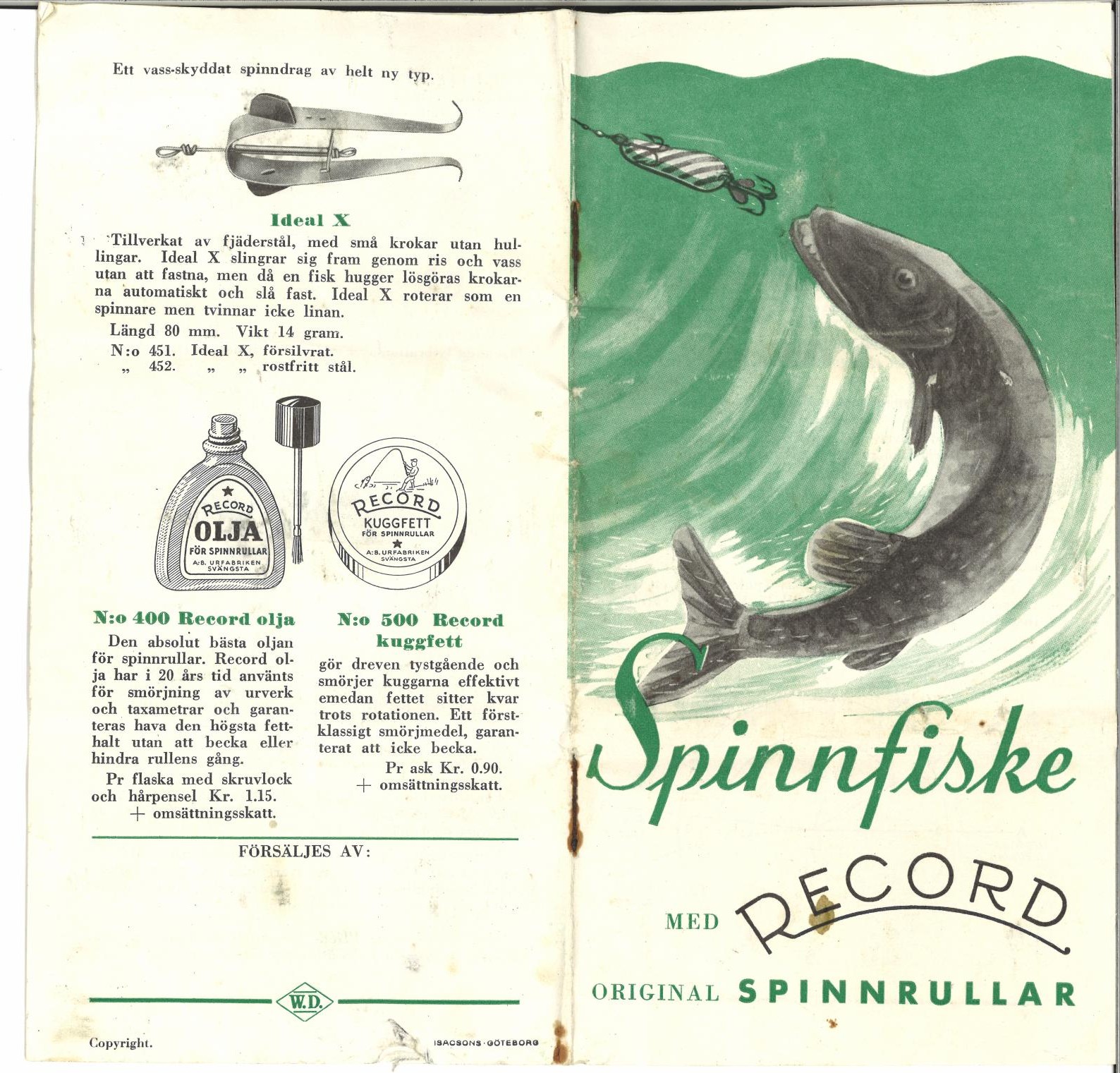
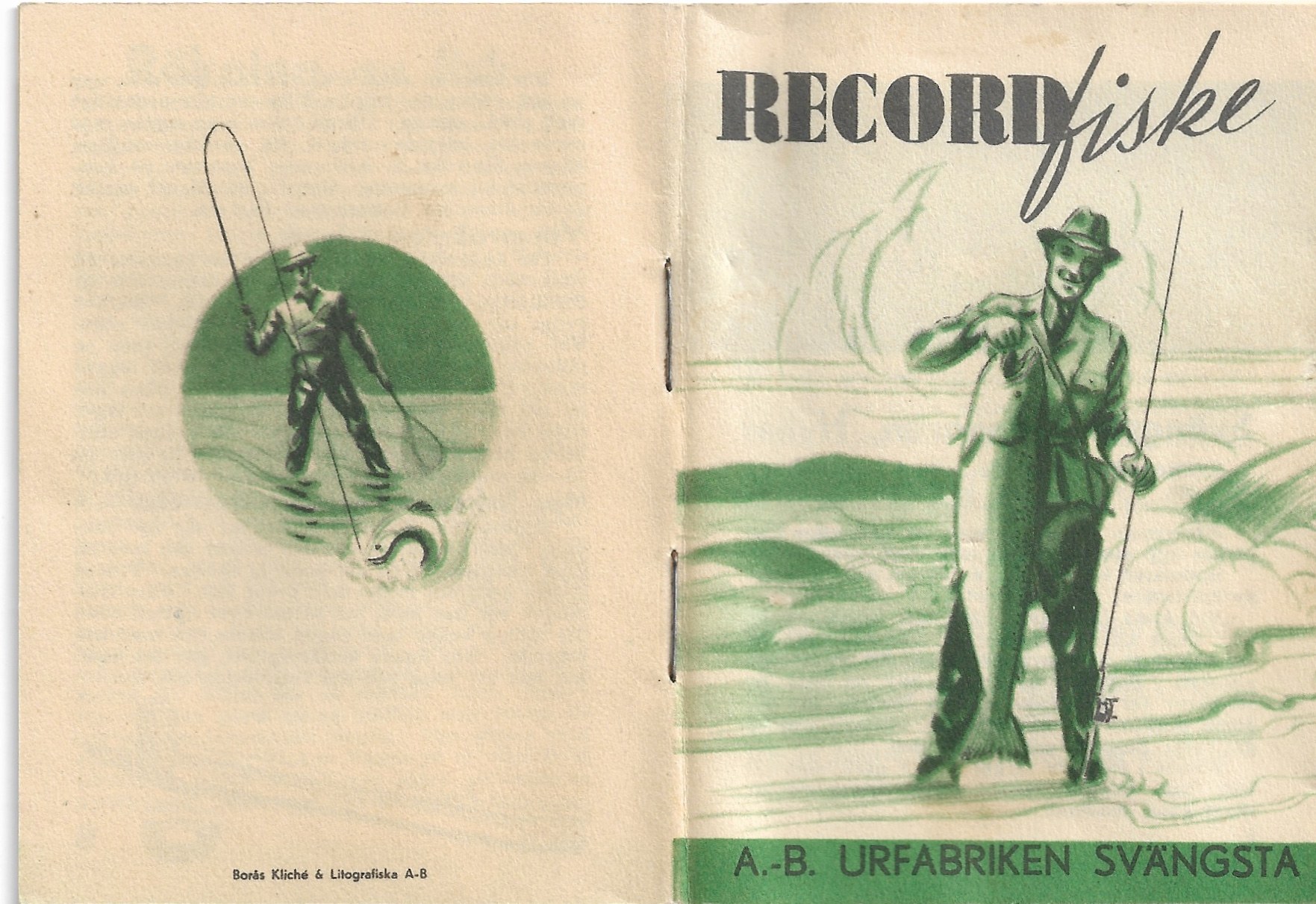
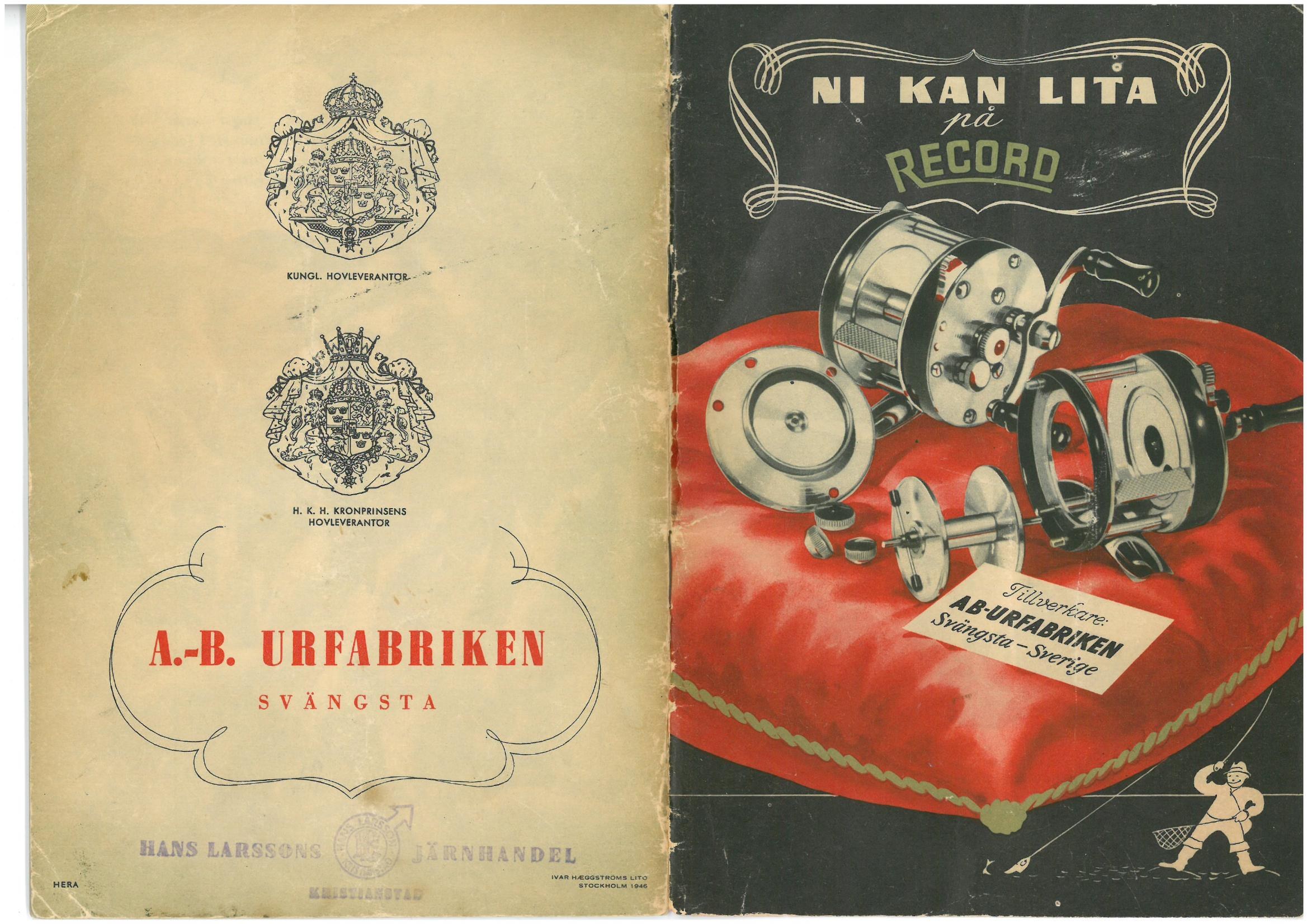
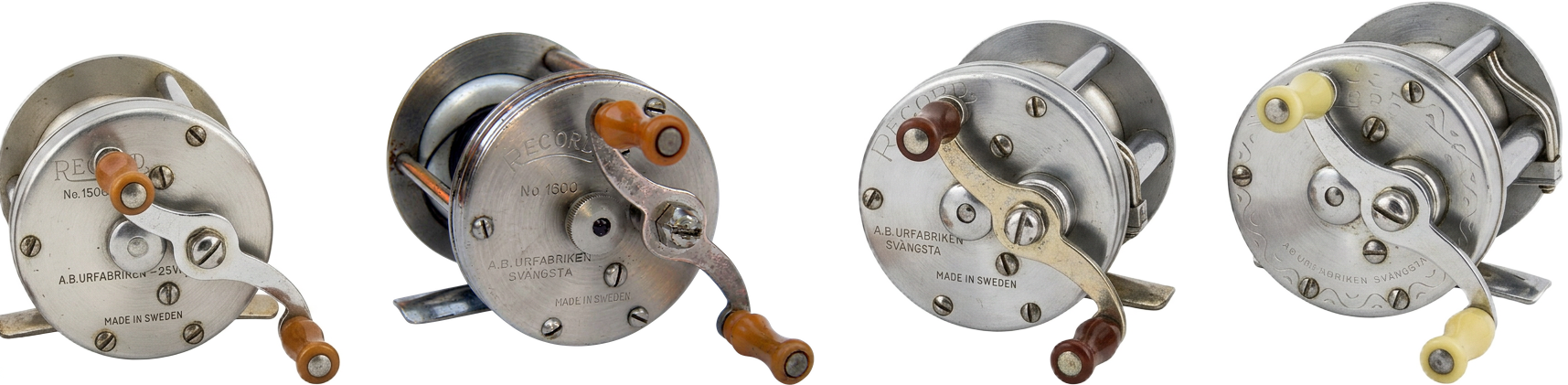
During 1939 AB Urfabriken developed four different spinning reels: Record 1500, Record 1600, Record 1700 and Record 1800. The reels shared the same basic construction but differed in size, finish and level of equipment. Göte Borgström took part in the development work himself and tested the reels while fishing, among other places in the Mörrum river.
A total of 25 reels of the four models were made in the first trial series. Göte Borgström packed the reels and travelled to Gothenburg to try to sell them to the wholesaler Paul Berghaus & Co.
The name Paul Berghaus can easily give the impression that Göte went to Gothenburg to meet a person by that name. That was not the case. The founder, Paul Berghaus, had died as early as 21 February 1911, almost thirty years earlier. Paul Berghaus & Co lived on only as a company name.
The person who received Göte Borgström and inspected the new reels was the company's managing director, Hakon Sjödahl.
At that time Paul Berghaus & Co was an established wholesaler selling hardware, firearms, ammunition, sporting goods and fishing tackle, with both market knowledge and a well-developed distribution network.
Hakon Sjödahl examined the new reels and asked how many AB Urfabriken could deliver. Göte replied that the factory could make 5,000 reels over the coming three years.
Sjödahl accepted the deal but set one important condition: the reels sold through Paul Berghaus & Co were not to carry the Record name. Instead they were to be marked and marketed under the company's own brand PEBECO.
The next customer booked in was the purchasing manager of Wilhelm Denninghoff's. Borgström met purchasing manager Torsten Persson in a hotel room in Gothenburg. Persson asked how many reels Urfabriken could deliver. Borgström ventured 15,000 the first year and 25,000 over the following two years.
Persson proposed that Denninghoff's buy 10,000 reels the first year and 15,000 over the next two years, on one condition: Denninghoff's would have exclusive rights to the reels. As Urfabriken needed the order to survive, Borgström accepted the deal. Urfabriken was allowed to sell a very small run without the W.D. counter-marking.
The first reels were delivered in the autumn of 1940. Both companies ran large advertising campaigns for their reels in the spring of 1941.
In 1941 the range was extended with a cheaper reel, the Record 1400.
In 1942 the range was extended with the Record 1550, 2000 and the Precision fly reel.
The 1400, 1500, 1600, 1700 and 1800 all have MADE IN SWEDEN engraved on the handle side during the years 1939–1943.
All reels have a toffee-coloured handle and a glazed agate stone in the bearing cup during their first years. The shade of the handle can vary.
The Record 1700 got a white handle in 1942 and the 1800 a yellow one.
In 1943 the contract with Wilhelm Denninghoff's expired.
In 1943 the MADE IN SWEDEN marking was moved to the foot of the reel. Model A was printed on the reels and a new, lighter spool was fitted.
Coloured agate stones on the reels; the 1500 and 1550 received cheaper agatine stones. The Record 2000 had a genuine ruby stone.
Continue reading
- PEBECO Sidan 1940–1943AB Urfabriken's first sportfishing reels and the collaboration with Paul Berghaus & Co.
- 5000 Arkivet — Napp och NyttAll scanned editions from 1948–2021, page by page.
- AB Urfabriken (ABU)The company history from watch factory in 1921 to the last reel in Svängsta in 2025.
- Ambassadeur 5000The hub for the reel's history 1952–2025: models, variants and eras.